Field of Science

Showing posts with label Scientists. Show all posts

Manifestation of Prof Stress

The Spring semester has ended, which means something from a teaching perspective but not from a research perspective. At least that's true for me. I know others can vary in their teaching/research mileage. For me, teaching is basically a fall/spring semester concern. I do teach a couple of weeks during the summer, but this requires little prep work so I don't count it. Research is a year long venture, but does suffer during the fall/spring, especially the fall, because of my teaching duties. A couple of weeks ago on consecutive nights, I woke up around 2 am from bad dreams. These dreams, I won't say nightmares because they were stress inducing but not terrifying, related to these two big areas of my professional life.

The first night it was a research related dream and the focus was on grants, big surprise to people in the field I expect. The dream actually started out on a good note as I was just awarded an R21 grant from NIH! The happiness and relief of having some money to conduct the research I want to do, quickly transitioned to stress as I began thinking about how quickly I could get someone hired and trained to do the research successfully. I became increasingly stressed because the R21 is only a two year grant. If it takes 6 months to hire and get someone well trained (a stretch in my opinion), I basically have 6 more months before we need to be generating most of the data in order to write a larger grant. For those not in the know, it takes a few months to write a proposal (for me at least) and then ~ 9 months before funding decisions are made. Thus, in order to maintain constant funding from the onset of the R21, I basically have 12 months to get most of the work done with an untrained person. I woke up a mix of happiness combined with a whirlwind of stress. I was up about 2 hours before going back to sleep.

The second night it was a teaching related dream. In real life I had just completed final grades for my Spring semester course and was breathing a sigh of relief to have ~3 months to focus on experiments and writing (papers and grants). In my dream, I felt like I was in the same place and at work setting up experiments when I realized my Fall semester classes were starting in a couple hours and I hadn't set up the course website, planned any lectures, etc. I was running around trying to get together some slides for the introduction and to print off some worksheets for the students but couldn't find a printer. To make things worse I couldn't find out where my class was meeting and time was ticking down to the point where I was figuring out how late I would be. Basically this was my adult version of the 'just realizing you have a final in a class you didn't know you were enrolled in all semester' nightmare. Again up for a couple of hours without being able to sleep.

Haven't had anymore repeats of the stressmares™, but apparently my sleep schedule basically requires waking up at 2 am. I do get some reading done I guess, but would rather get a straight 7-8 hours of sleep. Stupid brain.

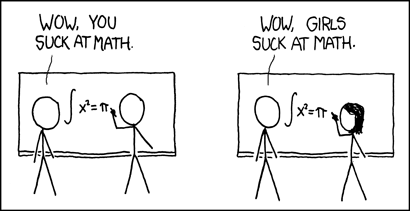
Women in Science: an Example of Roadblocks

It's exciting times in our Medical School. We recently completed a Strategic Plan entitled Strategic Vision 2025 and we hired a new Dean. There are numerous problems at the university medical school, but these are off-set (in part) by the many strengths of the medical school.
Our new dean has embraced the Strategic Plan and had a Town Hall meeting this last summer to outline in broad terms 6 goals to be addressed in the next year (some are of course longer term goals, but can be started sooner rather than later). These goals line up well with those outlined in the Strategic Plan, although the Dean has put them in a context he finds most compelling.

The 6 goals are to:

  1. Increase scholarship
  2. Increase NIH ranking
  3. Improve diversity
  4. Merge the diverse health systems
  5. Reduce medical student debt
  6. Increase financial resources
In the format of a town hall, there was little time to get into specifics of how each goal will be reached. However, the two approaches to improve diversity were striking to me in their focus. First the issue of diversity is readily backed up with data, this can not be ignored as simply an issue of 'political correctness.' As a percentage of the state population, minorities are underrepresented in the medical school faculty as are women. Half the state population is female and, not surprisingly, half of the assistant professors in the medical school are women. However, there is a precipitous drop in the percentage of women being promoted to associate and full professor such that 30% of associate professors are women and 10% of full professors are women. 

This begs the standard question, why is there a discrepancy?

Two general answers to this question come to mind. 1, there is a problem with the women that are hired such that they are unable to be successfully promoted; 2. there is a problem with the administration that, at least subconsciously, fails to promote women.

During said town hall meeting two ideas were presented to improve diversity within the medical school faculty. First, we need to have more mentoring to improve the success of our female faculty. Second, we need to have workshops to facilitate female involvement in various collegiate activities.


These two ideas suggested one thing to me: the administration believes the reason women are not being promoted is because of the women.


I am a huge supporter of mentoring, for everyone, at all levels, but I wonder why mentoring is specifically pointed out here. Are women not being mentored, but men are? If so, then this is an administration problem not a women problem. Are the women we hire in special need of mentoring that the men do not need? If so, then this is an administration problem not a women problem, because we are clearly not hiring high quality well trained women. The same arguments can be made for the workshops. Maybe the men are getting this extra information in the locker room or over cocktails after work when the women are not around. Regardless, this is an administration issue and not a women issue.

What struck me at this town hall was the focus was on 'fixing' the women so they could be promoted, not 'fixing' the administration such that women were not overlooked and ignored.


I couldn't help but wonder what the women faculty in the audience of that town hall thought. Not growing up in an environment where I was implicitly considered lesser based on my gonads, I couldn't help but think they would be insulted. But maybe they are used to it.

'How It Works' via xkcd

The Changing Climate of Science in the USA (not a post on climate change)

UPDATE: If you are coming from uncommondescent.com please substitute the letter o for all letter u's to avoid 'the vapors'. Also, substitute Darwinius masillae anytime you see the word ENCODE so you won't miss the fucking point (to make things easy, you'll only have to make this substitution once).

One of my heroes: from here
I have seen a shift in the way science is being conducted in the United States. This shift still reflects of minority of the science being done, but it also represents the majority of the science being reported or disseminated to the public. In short, it appears to me that the pendulum has swung from favoring rigorous science to favoring and rewarding what I will call 'splash' science. To be clear this struggle between rigorous and splash science is not new nor different than in previous generations. Nor is all rigorous science not splash and vice versa. However, I think in the US the pendulum has swung dramatically to the splash at the expense of the rigorous. This change in trajectory is not surprising as funding has constricted immediately following a massive expansion. There are too many mouths at the trough and they are competing for those few morsels of grain.

More and more, scientific research is being sold on its revolutionary impact and not on its scientific merit. Of course 'impact' sounds much more important than 'merit'. Hell, important and impact both begin with the letter 'i' so there must be something to that. It seems much more science is being sold as 'paradigm shifting,' 'completely unexpected,' 'novel' (the only one that is true, but only in the trivial sense), or 'needing to rewrite the textbooks.' In these cases, it's also 99.99999999% bullshit (e.g. ENCODE).


2nd edition, 2011
Now admittedly and importantly, there are many studies that reveal unexpected results that lead to interesting and a variety of unexpected questions, which can themselves lead to new insights. For example, I sat in the audience at an American Society of Microbiology conference on Candida and Candidiasis where the phenomenon of white-opaque switching (a well known but poorly understood phenotype of certain Candida albicans strains) was directly and elegantly linked to mating (a process that, at the time, had recently been described but the biology nor the relevance was not understood). This was one of those 'HOLY SHIT!' moments that was amazingly cool, but also neither paradigm shifting nor required the rewriting of textbooks. In almost every single case these types of studies will not shift a paradigm nor require the revision of any textbooks. The results may be unexpected, but at most they will lead to the addition or significant revision of chapters in specialized topic books, such as the Candida and Candidiasis book from ASM.

It could be argued that inflating the importance of a study does not undercut the underlying data. But this argument is generally wrong at several levels. First, in order to emphasize the ephemeral, the actual suffers. In order to emphasize the ability to grow in high levels of arsenic, Wolfe-Simon focused on the bacteria using As in place of P in DNA and other macromolecules. The ability of the isolated bacterium to grow in such high concentrations of arsenic is interesting, but this was ignored to focus on the rewriting of textbooks on the structure of nucleic acids, which was wrong. Second, to push your paradigm shifting results, you have to actively ignore or overlook the contradictory data, even that data contained within your own work. Third, you have to discount and/or disregard the data, usually mountains of data, that led to the current paradigm in the first place.

These issues are what concern me most. This is not how I was trained as a scientist and is philosophically opposed to my understanding of the scientific process. In science, at least at the core, we try to prove ourselves wrong. We do not try to prove that X causes Y, we try to prove that X does not cause Y. When we obtain data that undercuts a paradigm, we do not write a fucking press release, we first consider how we fucked up the damn experiment! We do not identify the next great anti-cancer therapeutic target, we identify a protein that is required for uncontrolled cellular replication in a certain cell line under certain growth conditions in the lab.

If we as scientists, have truly identified a paradigm shifting result or established that the textbooks need to be rewritten, this will come out in the end. If we hoist ourselves by our own petard, then we have a problem. Think about this, when we push these boundaries of science as I see happening too often in publications and manuscripts I review, are we any different than the snake oil salesmen of yesteryear, or the person at the other end of the psychic hotline, or the politician that assess every problem to some simplistic social issue we already agree with.

We're scientists. We're better than this.

Happy Birthday Dr. Franklin

Google celebrates Rosalind Franklin's 93rd birthday! Hurray for Science and Hurray for Google's celebration of Scientists!

It's time to read The Origin of Species....again

I kind of lost the energy to keep up with my Origin of Species (OoS) book club, but I'm restarting it. In part this is to renew my writing here at AbC, but mostly it is to finish reading the OoS. So I have skimmed over chapters 1 through 3 and gone over my notes.

Thoughts on the Prologue.
Thoughts on Chapter 1.
Thoughts on Chapter 2.
Thoughts on Chapter 3.

Now I am rereading Chapter 4 and getting ready to teach incoming College of Biological Sciences undergraduates for 2.5 weeks. Now's you chance to catch up and start. Because I am getting a manuscript to colleagues and teaching a shit ton (by number not weight) next week, the next OoS post will not occur before next weekend. You have time to catch up.

This is the OoS I am reading (it's the 6th edition and it does matter, at least somewhat)


Paleofantasy on the Radio Tomorrow

If you want to start your day out right tomorrow, I recommend:

"Paleofantasy", Marlene Zuk on Atheists Talk #225, June 30, 2013

Oh, poor humanity. Poor, poor us, stuck in a world for which we are so ill-suited, better fitted by our genes for using crude stone tools than our modern technologies, haunted by ancient instincts, slowly being killed by our strange habitat and behavior. Or maybe not.

In her new book, Paleofantasy: What Evolution Really Tells Us About Sex, Diet, and How We Live, evolutionary biologist and behavioral ecologist Marlene Zuk takes the stories we are told about how our deep ancestry determines the way we are and puts them under the microscope. They frequently come up lacking, but along the way, Zuk provides an entertaining education about our paleolithic and more recent pasts.

Join us this Sunday, when Dr. Zuk shatters our myths about our past and gives us something more interesting to replace them with--the truth.

Listen to AM 950 KTNF on Sunday at 9 a.m. Central to hear Atheists Talk, produced by Minnesota Atheists. Stream live online. Call in to the studio: 952-946-6205, or send an e-mail to radio@mnatheists.org during the live show.

Google Hearts Microbiology

Today is a great day to do a google search. Google celebrates the 161st birthday of Richard Petri with a Doodle. Petri is the inventor or the plate that bears his name and is used by microbiologists, genetics, molecular biologists, etc. the world over. His wife also made an tremendous contribution to microbiology, by suggesting the use of seaweed extract (red algae to be specific) as a base for the growth medium used in the plates.

Physicist Lawrence Krause on Atheist Talk Tomorrow


Calendar:Minnesota Atheists
Title:"Atheists Talk" Radio AM 950 KTNF
When:Mar 04 9:00 am - 10:00 am
Description:Sunday, March 4, 9:00am-10:00am “Atheists Talk” Radio
AM 950 KTNF in the Twin Cities or stream live at http://www.am950ktnf.com.
Guest: Lawrence Krauss discusses “A Universe from Nothing” Chris Stedman discusses “Bridging the Religious-Secular Divide” Contact us during the show with questions or comments at (952) 946-6205 or radio@mnatheists.org.


If you are not near a radio or not in Minnesota, you can stream AM950 live here. (Select Minnesota as your state.)   If you miss it you will probably be able to get the podcast later in the day.

Name that Scientist Quiz

How did you fair? Check out the NYTimes Name that Scientist Quiz.

Name that Scientist


I scored 8/10, missed #6 and #8.


H/T WEIT

Student research blogs to follow

Some undergraduate students are blogging about their travel abroad research experiences. You should check them out and give them some encouragement.

We have Chelsey doing some work in South America.
You can also check out Lauren in Guatemala.

Enjoy and if you know of other students blogging about summer research let me know and Ill add them.

Fun for the biomedical graduate students

I know this is a few months old, but its still funny as shit. Also, huge kudos to the makers of this video.


How many aspects of "this bad project" can you relate to? My personal favorite is 'what's in this box?'

Brewers Unite! at the Univ. of MN

For those interested in science and beer, the following seminar is taking place this Thursday.

3:30-5 p.m., Thursdays | 239 Gortner

"The Natural History of Beer"


Jim Cotner Ph.D.

Dept. of Ecology, Evolution & Behavior

University of Minnesota


Items of Interest

Since I wrote this recent post, I thought Ild share some related information. First, the colleague, Dr. Cotner, who is using the "penis as an evolutionary spade" paper in her class was interviewed on a local radio show (4/3/11). You can find out some information regarding her popular biology (sex) class. Also, she is giving the following seminar in the Department of Ecology and Intelligent Design Evolution Biology:


EEB Seminar
April 6, 2011
3:30 p.m.
335 Borlaug
Dr. Sehoya Cotner
A classroom full of creationists: Separating fact from fiction in evolution education
If we accept that evolution is essential—if not the key—to understanding biology, then we also have a problem: How can we understand the tendency of so many practitioners of biology to avoid teaching evolution? Recent events in the evolution-creationism controversy highlight the tensions involved in teaching and learning about evolution, and reinforce themes that have persisted for decades. My work with colleagues, from both a survey-based perspective, as well as from my experiences teaching on the front lines of introductory biology, will inform much of this discussion.  Namely, we’ll address what our students have learned prior to arriving at the University, how they perceive the evolution they are taught in class, and what, if anything, can be done to affect positive change in our students’ understanding of the discipline.


Personally, I love the accompanying picture. 

Woman who caused Earthquake interviewed tomorrow

Jen McCreight of Blaghag fame will be on Atheist Talk tomorrow (Sunday) March 13th 9AM Central on AM 950. McCreight became more infamous by starting Boobquake. When an Islamic cleric blames earthquakes on women wearing immodest clothing (he should have seen the French Canadian on the Maine beaches in the late 70s!), the Jen McCreights of the world test the hypothesis. Of course a 6.5 magnitude earthquake did occur concomitant with boobquake, so call in and ask her to defend her actions against humanity.


Also, the discussion will address the following: 


"Why are women more religious than men when most
religions are so anti-woman? Jen McCreight will address this paradox,
make the case for why it’s time for women to leave religion, and
discuss why skepticism and atheism are empowering for women. "


You can live stream the show, simply enter a Minnesota zip code, like 55455.


Science-related events happening in the Twin Cities

Events starting this weekend:


PZ Myers is speaking at 10AM Saturday on "The Evolution of Cooperativity" at the Nokomis Recreation Center (2401 E Minnehaha Parkway, Minneapolis) (Sadly I can't attend.)


(PZ will then be on 'Atheists Talk' radio show Sunday at 9AM Central, 950AM KTNF), which can be streamed live)


PZ will then be at speaking at the Roseville Public Library on Sunday at 1PM (My son and I will be in attendance). 


and then next week:


Engaging Science February 23, 11:30—12:30 p.m. | Humphrey Center


Hubert H. Humphrey was an innovative leader for his time, championing legislation that promoted scientific discovery. In honor of his legacy, Deb Swackhamer, Elizabeth Wilson, and Steve Kelley will lead a lively conversation of the challenges involved in making science engaging, engaging young people and our broader society in science, and engaging science and policy-making. The discussion will take place from 11:30 a.m. to 12:30 p.m. on Wednesday, February 23, at the Humphrey Center, and is free and open to the public.
Clearly these events are being thrown in honor of my birthday, which lies right PZs talk and the Engaging Science discussion.

On applying to graduate school

This was supposed to be a response to my collective blog partner Psi Wavefunction (who has one of the coolest first name pseudonyms).

Another blog partner Gw/W submitted a post on graduate school applications, to which Psi in part responded:
"I find it quite easy to get in contact with potential supervisors, but that's probably because I usually know about their work first, and then find out where they are and whether they take students, etc. I find meeting them in person at meetings and department seminars helps things a lot. Actually, come to think of it, I haven't contacted anyone I didn't at least have some connection with already, at least through someone else who knows them personally. Then again, I've specialised pretty hardcore already, and in a small field like ours, everyone knows everyone... 
My trouble is with the application process itself, as my grades and GRE scores are...well, shitty. So I have to tailor my application to sneaking past the admissions people rather than appealing to a supervisor. Kind of the opposite problem to what more typical applicants have, it seems. 
I can freely chat with faculty about everything from research ideas to my transcript issues, but blank out completely when faced with personal statements and other formal application stuff. Where do I even begin? That was semi-rhetorical, but some advice would be very helpful! =D"
I posted an, as usual, overlong response, which blogger told me was too long. Since I am not willing to cull my infinite wisdom, I will add even more and make this an entire independent posting (take that blogger!).

Psi my experience comes from personally applying to (as a graduate student) basic biology programs and reading applications to (as a faculty member) a biomedical graduate program. My responses here represent my assumption that you are applying to a PhD program in the biological sciences.

1. In my experience direct appeals to specific PIs do not amount to much. Any decent direct applications I get I forward to our program secretary to be dealt with the official way (most go right in the trash because the student is spamming for a position). However, if you are keenly interested in biofilms and the Univ. of East Bumfuck only has one biologist working on biofilms, it may be worthwhile to see if they are planning on retiring in the next two years. Of course I would point out that it is insane or at least asinine to go to a program for one lab. What if they find someone they want more after you enroll?

2. You mention specialization. Do NOT get yourself stuck in a specific field. You are young (Im assuming), why limit yourself? As an undergraduate I did plant molecular biology research, that was the best shit ever! I applied to molecular biology programs with great plant labs. I rotated in a Saccharomyces lab, that was the best shit ever!! So I got my PhD in molecular genetics in yeast, and then found a post-doc working on a pathogenic fungus with non-existent genetics, and you know what? It was the best shit ever!!!! My point is keep a broad outlook, I still learn so many interesting things in biology. You need to be conversant with Drosophila geneticists, T-cell cell biologists, bacterial structural biologists, etc. at least if you want to be more than a glorified technician. (BTW I am not suggesting changing your field, just not be immune to other fields.)

3. Applications to my program are scored based on GREs, GPA, letters of recommendation, and personal statement. Kind of in that order, although there is much room for variation. We have looked over the last 5-10 years of our program and found that GRE score is the only indicator associated with grad school success (although lack of real bench work is associated with a lack of success, probably because students don't realize what it is they will be doing).

4. So GPAs, they are what they are, but are they? Poor GPAs are problematic, but not all problems are the same. Was your GPA shit early on and get better? That's a good thing. Were your GPAs awesome then get shitty? That's a bad bad thing. Did you do well in your science classes, at least those related to the program you are applying to? If yes, good. In no, reconsider you program. If your GPA was due to a bad year hopefully (as bad as this sounds) there were some obvious extenuating circumstances, such as a death in your immediate family. The committees that look at these things really look at them, so if you suck at art histroy but for some godforsaken reason minored in it, the reviewing committee will know that your sucky GPA is do to the fact you are not a cultural maven (a plus actually to be a scientist). From personal experience, I stunk up the joint my first year of undergraduate (1.8 GPA my first semester). That was basically impossible to recover from, but I was 4.0 my senior year. Overall GPA was garbage, but a more careful analysis showed I was a great student who was too not ready for college from the outset. I survived. Regardless, you need to deal with your GPA in your personal statement.

5. GREs are important, particularly the math component. If you do well there and speak fluent English, verbal is given a pass and the essay is BS to begin with. Write as much as possible in the time allotted to increase your score (word count matters, but shouldn't). The math component is considered strongly, hopefully you did well there. If not you need to deal with it in your personal statement.

6. Letters of recommendation. These are your get out of jail free card. If your GPA and GRE suck, this can easily salvage you. You should have strong relationships with your letter writers. I wasn't planning this ahead of time, but played poker with one of my professors every couple of weeks. Despite taking his money often, I gained a great personal relationship with him as well as several other faculty members. This is important, neigh essential. Be someone, not just a grade. If you have research experience great (although this is almost a requirement). If you have a publication, you are fucking set! Even if its a fourth authorship. The publication shows that you are able to work on a piece of research that is publishable and published, that is currency you should use to its fullest, which takes us to....

7. Personal statement. The personal statement is important, but difficult to write. You need to do several things.
A. Tell the committee why you are interested in their program (each letter to a program should be different at some level to hit this point).
B. Share your passion for science! But do NOT NOT NOT NOT NOT tell us you need to cure cancer because your dear grandma who helped you through the difficult time of middle school bullying died from cancer. Every statement like that makes me feel for the candidate while I put the application in the discard pile. All you convey is that you are only interested and focused on one specific thing. You will not cure cancer during graduate school or learn how do to it while in graduate school, so all you are telling the committee is you are naive and scientifically immature. (If you having an outstanding blog, this may be the place to note it. It demonstrates your writing skills, passion, and intelligence. Although I would not overplay this, because many people (old white guys) still view blogs with some distaste.)
C. Talk about your research experience, what you did, why it was important, what it meant to you. If you have awards flaunt them in you personal statement, don't leave them hidden just in your CV.
D. Finally, and most importantly, while you will obviously highlight your achievements you must address your weaknesses. When you write a scientific paper, you deal with the weaknesses up front, you don't hide them and hope for the best. If you deal with them, your reviewers understand that you are critical and thorough, thus they do not have to be (at least not as much).

Finally, don't take it rejections personally, a good lesson to learn early in science.

Best of luck Psi and other potential graduate students.

In which I disagree with a Nobel Prize winner...

This last week my MRU had the privilege in hearing a talk by Dr. J. Michael Bishop entitled "The Cancer Genome of Therapeutics." It was an interesting talk and Dr. Bishop told several good stories, which isn't that surprising since I expect you don't get a Nobel if you can't give a good talk. However, just because you give an interesting, engaging, and thought provoking talk, doesn't mean I have to agree with you.


The thrust of the talk was based on the idea that by comparing cancer cells with "normal" cells, we can identify things that are different. Once differences are identified, these are now targets for therapeutic interventions. Now I want to be clear for those not knee-deep into the biological sciences, when I say "targets for therapeutic development," I am not suggesting that therapies exist. This is the 4000 lb. gorilla in the room no one likes to talk about in many scientific areas. Just because you identify a target, does not mean you have any way of hitting it. Two thousand years ago if a hungry hunter saw a fat elk on the other side of a 500 foot gorge (the target to solve the problem of hunger), there was nothing the hunter could do about it. Even if said hunter had a bow and arrow or more likely an atlatl, the elk is still a useless target, since the dead elk would be eaten by wolves, lions, and other animals long before the hunter could climb down the gorge and back up the other side. So having a target does not necessarily mean much.


One way in which these target identification approaches is done is to identify genes that are expressed in one cell type but not another, such as expressed in cancer cells but not in normal cells. This is usually the direction these approaches work too, we look for things that are expressed in the undesired cell, not things that are absent. (Its easier, but not impossible, to target something that's there not something that's missing.) Also, we generally go for genes and not proteins because it is currently much easier to determine what genes are or are not expressed over essentially the entire genome than it is to determine all the proteins expressed in a given cell population. This means our measure for expressed targets is somewhat indirect.


So lets say we find 12 genes are expressed in a specific kind of cancer cell, like breast cancer cells, but no in normal breast tissue. (The reality is many more than 12, but let's keep the numbers small.) Do these 12 genes specify 12 new targets? Well, the short answer is no. See these 12 genes are found in the genome because human beings probably need this gene for something other than causing uncontrolled cell growth in the breast. This is a huge limitation to this kind of approach. Just because you identify an expressed gene specific in a cancer compared to the otherwise normal tissue, does not mean and almost certainly doesn't mean the gene is not normally expressed somewhere. So your newly discovered cancer target may also be a pancreas development target or bacterial combating lymphocyte target too.


This is where I was left wanting. The nobel winning scientist begins their talk by establishing the overarching theme: by comparing cancer and normal cells/tissues, we will identify new targets based on these differences, and begin curing cancers at a previously unknown rate. Sadly, the first thing that came to my mind was all those microbes that have been killing us for generations and are still pretty damn good at it. Bacteria are about as different from us as you can get and you know what, we really have no new ways of combatting them. They kill more of us than cancer, but pharmaceutical companies have been shutting down their anti-microbial divisions to the point few actually exist anymore. (Don't blame the pharmaceutical companies, which can make a ton more money making guys hard, women skinny, and kids easier to oversee in factories schools.) Bacteria, fungi, protozoan parasites. All are extremely different from us at least when compared to cancer cells which are essentially clones of all your other cells.


So I am skeptical that knowing all the differences in expression between cancer cells and normal cells will pay dividends in any rapid way at least not as sold. However, I am not against this approach scientifically (I am against how it is sold to the public though). This will definitely tell us much about cancer biology, it will reveal commonalities and distinctions between different cancers, it may reveal genetic risk factors in patient populations that could impact screening and lifestyle choices (think about the current mammogram controversy), it may also lead to new treatments just not in the one gene = one target paradigm.


There are two ways I can envision genomics leading to targets that are susceptible to therapeutic intervention.


1. Often cancer progression is associated with chromosomal rearrangements. One chromosome recombines with another making a fusion chromosome not found in normal cells. A recombinant chromosome is not necessarily a bad thing and normal cells frequently contain them. However, the recombination can lead to the generation a protein that would never normally be generated. If the recombination occurs in the middle of two distinct genes a fusion gene can be created. One famous case of this is Bcr-Abl, which is associated with certain leukemias. Abl and Bcr are both kinases, although the specific function of Bcr is still not clear. The Bcr-Abl fusion removes an inhibitory domain of Abl, which leads to hyperactive Abl and that is oncogenic (cancer promoting). These types of rearrangements can be detected using new deep sequencing genomic approaches. 


2. Cancer is complicated and not due to a single cellular defect. Cancer requires numerous genetic changes. What we often see is that for a given type of cancer a similar set of cellular pathways act differently, although in the same way in the cancer. Much like specific targets, like a protein, a pathway can be the target for a therapeutic intervention. Actually, pathways are much larger targets since a pathway can be targeted by disrupting any of the proteins that make up the pathway. As before these pathways exist in normal cells as well. However, we could target two or three different pathways that are hyperactive in cancer cells with different therapeutics, which could kill the cancer cells. A normal cell may require one or two of these pathways, but not all three and thus would be 'immune' to the treatment. Admittedly there are a lot of ifs associated with this approach, but it is a viable approach. In fact, this is the approach that has made HAART so successful in treating many HIV infections.


I don't mean to be all gloom and doom, but the scientific community has gotten a fair bit of well-deserved blow back from overstating the impact of our studies to the lay public. Also, the fact that a given approach may not lead to a life-altering new product does not mean it is not worthwhile. If we look back through the history of science, many of the biggest advances were not front page news at the time. One ready example is the initial identification of penicillin by Fleming occurred in 1928 (earlier reports existed but this was the one that stuck), however it took 11 years and another group (Chain and Florey) to purify it for use as an antibiotic. This is a rapid turn around time and probably a poor example, because penicillin changed our lives. None of us were alive when death from bacterial infection was common and normal. People did not generally die of cancer or heart disease. The splinter in your finger you got chopping wood, that could kill you, if you got the wrong bacterium in the wound. Of the ~350,000 Union soldiers that died in the US Civil War, ~220,000 died of disease. Or pre-penicillin, in WWI 16.5/1000 soldiers died of disease/year whereas post-penicillin, in WWII 0.6/1000 soldiers died of disease/year1. The take away point is that new treatments take time and are not often clear from the initial findings. The second point is that we'll probably never see another medical intervention that has the same societal effects as the antibiotic generation.

Response from a non-football fan aka debate attendee

While I was not able to attend the seminal debate between PZ Myers and Jerry Bergman addressing the question "Should intelligent design be taught in the schools?" several of my colleagues did. (Big shoutout to my peeps.) One attendee had a particularly eloquent synopsis for me that they kindly said I could post. I have included a few comments, in black, and only edited for anonymity.

... you didn't miss much. PZ did clean up the floor with Bergman. But I have to be honest - Bergman was so disorganized and so off topic the whole time I almost felt sorry for him. He came across as someone dangerously close to having a treatable mental illness. He squandered most of his opening 20 minutes blithering on about his own upbringing (although he conveniently failed to describe his sham PhD). In one sentence (and he did this *multiple* times) he would go from the irreducible complexity of quarks (I kid you not (thank you Sarah Palin for ruining this phrase)) to the multiple functions of the human appendix to the horrors of Nazi Germany. There was just no following the guy. And oh - the delusions of persecution (another sign of psychiatric pathology). There are apparently scores of ID-loving biologists in fine universities across the country who are afraid to "come out of the closet" for fear of losing their jobs. In spite of this, they have published about 1000 (Bergman's number) papers in the scientific literature on ID. Of course, there was not a single citation offered, nor an explanation as to how one gets published from in the closet. Pseudonyms? (Clearly, I gravitate to those of a more sarcastic nature)Bergman himself has been ostracized from the Jehovah's Witnesses (he was one for years) and the atheists (he was one for years), and now all his Nobel laureate friends won't write back to him now that he's an ID'er. That last one sounded like a pretty bad delusion of grandeur to me. And - it was all on Powerpoint slides. He never actaully answered the question, which was Should ID Be Taught in Schools? He did go on and on about his own groundbreaking work in the development of MRI and other imaging technologies and his cutting-edge research on mutations in cancer cells. Oh - and he was among the first to prove that so-called junk DNA isn't junk after all. Hard to believe that a CV like that can't get you a better job than at a community college in Ohio .....In any event, he (Jerry Bergman) freely admitted (multiple times) that ID has no actual stated theory, mechanistic explanations for how things work, empirical data to go on, or predictive power. But, since evolution is only (his words) "From the goo to you, by way of the zoo" then ID must be right. How *do* you debate someone that far off the rails?

PZ was spot on, and used what I thought were several interesting tacks besides science. For instance, he pointed out the ethical responsibility teachers have when they agree to work within a curriculum and framed it in a very compelling argument.
(This is a great point until you realize how tenuous the hold of science is in these issues. If the curriculum is changed to a creationist one, then teachers would also have a legal, note I didnt say ethical, responsibility to work within this curriculum. Cheri Yecke almost derailed the last Minnesota science standards, not to mention Kansas, Texas, Florida, etc.) He also talked about how new ideas in science get vetted, starting at the highest levels, and how ID has attempted to do an end-run around the whole process.

Sadly, but not surprisingly, there were plenty of bible-clutching home-schooled teenagers there drinking the koolaid with their parents/teachers. One teenages had the ignorance to trot out the "But it's *only* a theory" whine when the Q&A started. PZ answered it beautifully, without condescension.
(Clearly a missed opportunity)

(and probably the most important point my friend made was....)On the whole, I doubt a single mind in the audience was opened or enlightened, much less changed (and herein lies our greatest hurtle). One debater was prepared and focused, and the other would probably benefit from medication.

Many thanks for giving me a run down of the "debate" and allowing to post these comments. And I truly am sorry and wish I had been there to see PZ toss his notes over his shoulder when he realized they would be superfluous.

Come celebrate Darwin's Birthday

LIFE: A Journey Through Time
North American Premiere /Darwin Day Opening Event
Thursday, February 12, 2009, 7 to 9 p.m.
Bell Museum Auditorium
$10/ free to museum members and University students

Celebrate the 200th anniversary of Charles Darwin's birthday with a special preview of LIFE: A Journey Through Time. The event will feature top University biologists using Lanting's photographs as a springboard to deliver a rapid-fire presentations relating their research on evolution to the images. From the big bang to the human genome, hear the newest theories on how life evolved and enjoy the North American premiere of one the world's most celebrated photography exhibits. Think speed-dating - Darwin-style!

Speakers include:
Mark Borrello <---- Teaches on the history of evolution, and is an anti-creationist superhero
Sehoya Cotner <---- Teaches about Sex and evolution, dont tell the Georgia state legislature
Mark Decker <---- Teaches, Writes, Teaches, Skydives, oh and strives to improve Teaching (Plus he doesn't snarf your scotch when you are off teaching.)
Greg Laden <---- Not sure about this guy, does something or other someplace
Keith Olive <---- A physicist! Clearly, a late addition to make the biologists feel inadequate...or maybe I'm transferring.


BTW its a birthday party. There will be cake!